April 20, 2026 | By Admin
Home Loan in 2026: Fixed vs Floating – What Should You Choose Now?
Taking a home loan is one of the biggest financial decisions in life. But one common confusion every borrower faces is:
Should you go for a Fixed Interest Rate or a Floating Interest Rate?
In 2026, with changing market conditions and RBI policies, choosing the right option is more important than ever.
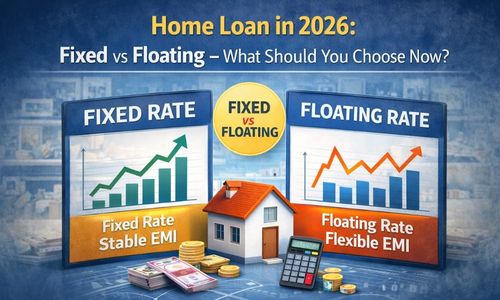
What is a Fixed Interest Rate?
A fixed interest rate means your EMI stays the same throughout the loan tenure.
Benefits:
- Stable EMI (no surprises)
- Easy financial planning
- Best for long-term security
Drawbacks:
- Slightly higher interest rate than floating
- No benefit if market rates fall
What is a Floating Interest Rate?
A floating interest rate changes based on RBI repo rate and market conditions.
Benefits:
- Lower starting interest rate
- EMI may decrease if rates drop
- Better for long-term savings
Drawbacks:
- EMI can increase anytime
- Difficult to plan budget
What’s Happening in 2026?
- RBI interest rates are fluctuating
- Banks are offering competitive floating rates
- Many borrowers are choosing hybrid options
This means floating loans are attractive—but not for everyone.
Which One Should You Choose?
Choose Fixed Rate if:
- You want peace of mind
- You have a fixed monthly income
- You don’t want EMI surprises
Choose Floating Rate if:
- You want lower interest cost
- You can handle EMI fluctuations
- You are planning long-term loan (15–25 years)
Many banks now offer Hybrid Loans:
- Fixed rate for first few years
- Then switch to floating
This is a balanced option in 2026.
- Fixed = Safety
- Floating = Savings Opportunity
Choose based on your income stability, risk appetite, and financial goals.